
The end …
This is the end of our broadcast day here at Murketing.com. Thanks for having tuned in!
Please head over to RobWalker.net for more on whatever I’m up to now.
------------------------
--> The Metapoll. Take it.
 Things That Look Like Other Things.
 Counterfunctionality (A Gallery).
 MLK BLVD: Open-source photography project: Contribute to the Flickr pool; browse the blog.
 "Where Were You?" Annual.
 Titans of Finance: True Tales of Money & Business
 . With Josh Neufeld. Now available for the iPad! Go here.
This is the end of our broadcast day here at Murketing.com. Thanks for having tuned in!
Please head over to RobWalker.net for more on whatever I’m up to now.
Somewhat late this year, here is my semi-data-driven look back at my 10 favorite songs of 2012. (I have previously conducted this empirical/subjective exercise for 2007, 2008, 2009, 2010, and 2011.) As I did last time around, I’m posting this on the otherwise dormant Murketing.com in order to take advantage of the useful table plug-in. I’m “hiding” (sort of) this post by giving it a fake post date — the real post date is March 23, 2013.
Here’s the top ten. Number-crunching and analysis follows.
[table id=20 /]
As always:
Continuing last year’s trend, I’m buying a lot less music these days than I was when I started doing these analyses, and evidently I’m not listening as much, in iTunes, to the music I do acquire. Also continuing the prior year’s trend, there was quite a bit of music last year that I meant to buy, but so far have not. I’ll repeat my 2011 assessment verbatim: “Partly I’ve been busy, partly I’ve been on a budget, and partly there’s so much interesting music around that’s released free-and-legal, I haven’t really found myself sitting around craving new sounds as much as usual.”
On to the numbers. Last year I added to my iTunes library 244 songs that were released in 2012. The comparable number in 2011 was 262; in 2010 it was 350; in 2008 it was 377; in 2007 it was 325. So the downward trend from last year continues.
So let’s look at the Top Ten. Remarkably, I only awarded five stars to two 2012 songs! Although I played “Ruin” slightly more often, the real standout of the year for me was “Come Save Me,” so I gave that the top spot.
Re-listening to my most-listened songs, I felt I had to do a little more subjective tweaking this year to recognize music that I acquired later in 2012 that I suspect will get more plays in the future. Notable among these are “I [Heart] You,” and “Voting Booth.” The latter is notable because it was part of the Disquiet Junto project run by Marc Weidenbaum. This is an amazing series in which Weidenbaum issues an “assignment” every week to the informal crew of musicians who have involved themselves in the project, and who then create new music in response. “Voting Booth” is by Ethan Hein, who I have basically become familiar with via Disquiet and who was, for me, the most pleasing musical discovery of last year.
I’ll also mention for the record the songs that got more plays than what I ended up putting in my final Top Ten: “You’re So Cool!” by MegaFun, “Moogy Foog It,” by Karriem Riggins, and “On Your Way” by Alabama Shakes all got 12 plays, “Cigarette Afterwards” by rawb1 got 13, and “El Caudillo Del Sur” by Centavrvs got 14. All good stuff, but as noted above, I made some tweaks — that’s the subjective part of this list!
Given how late I am with this, I’m going to cut the analysis short right there, and offer a belated: Happy New Year!
It’s time once more to take a semi-data-driven look back at my 10 favorite songs of the year just ended. (I have previously conducted this empirical/subjective exercise for 2007, 2008, 2009, and 2010.) I’m posting this on Murketing.com, which is technically a dormant site, because this is the easiest place for me to take advantage of useful plug-ins. I’m “hiding” (sort of) this post by giving it a fake post date — the real post date is January 8, 2011.
Here’s the top ten. Number-crunching and analysis follows.
[table id=7 /]
As always:
This was a weird year for me, music-wise. I still haven’t gotten around to buying a lot of the 2011 releases I still intend to buy. Partly I’ve been busy, partly I’ve been on a budget, and partly there’s so much interesting music around that’s released free-and-legal, I haven’t really found myself sitting around craving new sounds as much as usual. (But that may be because of the “I’ve been busy” factor just noted.)
Also: I don’t track this data (I wish I could), but I’m quite certain I spent more time in 2011 listening to podcasts than in years past — including music podcasts. I also suspect I listened to more Internet radio and streams than usual: Pandora, KCRW, Give The Drummer Some (the show and the stream), Rock ‘n’ Soul Ichiban (another WFMU stream), WWOZ, and WBGO, to name some examples. (What about Spotify? I’ve used it a little, but honestly not much. And I never did get around to exploring Turntable.fm.)
But since this is supposed to be a data-driven exercise, let’s look at the numbers. Last year I added to my iTunes library 262 songs that were released in 2011 (as opposed to older songs that are “new to me,” as they say). The comparable number in 2010 was 350; in 2008 it was 377; in 2007 it was 325. So it does seem my 2011 inventory is a bit light. (I added 779 songs overall to my iTunes library in 2011, meaning that as usual “new” music was in the minority — but this number is also generally low by past standards, again suggesting an overall trend, for the year at least, away from adding to the library at all, for whatever reason(s).)
So let’s look at the Top Ten.
In the past I’ve done some additional analysis based on LastFM data, but there was some kind of glitch between me and LastFM this year, and basically I consider all my data over there totally useless for now. In recent months the glitch seems to have resolved itself, so it’s possible LastFM data will be useful for 2012 — but sadly its utility as a tool for assessing longer-term trends is now completely suspect.
A final note: This is the fifth time I’ve done this. I think now perhaps enough time has gone by to consider a serious re-assessment of past lists: How will my best of 2007 hold up in 2012? I don’t really intend to think about that overtly in the year ahead, but I think it will be something worth visiting when the year is done. Unless that Mayan end-of-the-world thing is true, in which case I guess this will have marked my final entry in this series…
Happy New Year!
If you happen to be someone who is interested in ambitious approaches to the medium of nonfiction radio, you might interested prednisone in a closer look at something mentioned only in passing in the Radiolab piece I did recently: The Third Coast International Audio Festival. While this is an event, it’s also an organization, with an enjoyable podcast called Re:Sound, and cool-sounding happenings like Listening Room events, which present radio stories into public settings, and projects like a Short Docs competition.
I actually listen to quite a few podcasts and considered offering up a list, but I suspect most of what I’d have to say is kind of predictable. However, if you would like to promote or endorse a podcast or radio show you (https://marblerestorationco.com/order-xanax-10mg/) love, the comments are open.
A relevant question to ask at this moment is: Why would anyone bother to invent a new aesthetic for such a retrograde form? This is an exciting time for innovation in new media: interactive forms for active consumers. Radio, in contrast, just washes over you or drifts by in the background. It seems ill suited to an audience that multitasks, demands to react or contradict in real time, insists on controlling information rather than receiving it. Yet “Radiolab” — which just won a 2010 Peabody Award — has responded to all this by designing a show for sustained and undivided attention. It wrestles with big, serious ideas like stochasticity, time and deception. It ignores the news cycle completely. And it expects you to stop checking your inbox, updating your status or playing Angry Birds and spend a solid hour listening.
Read the article in the April 10, 2011, issue of The New York Times Magazine, or here.
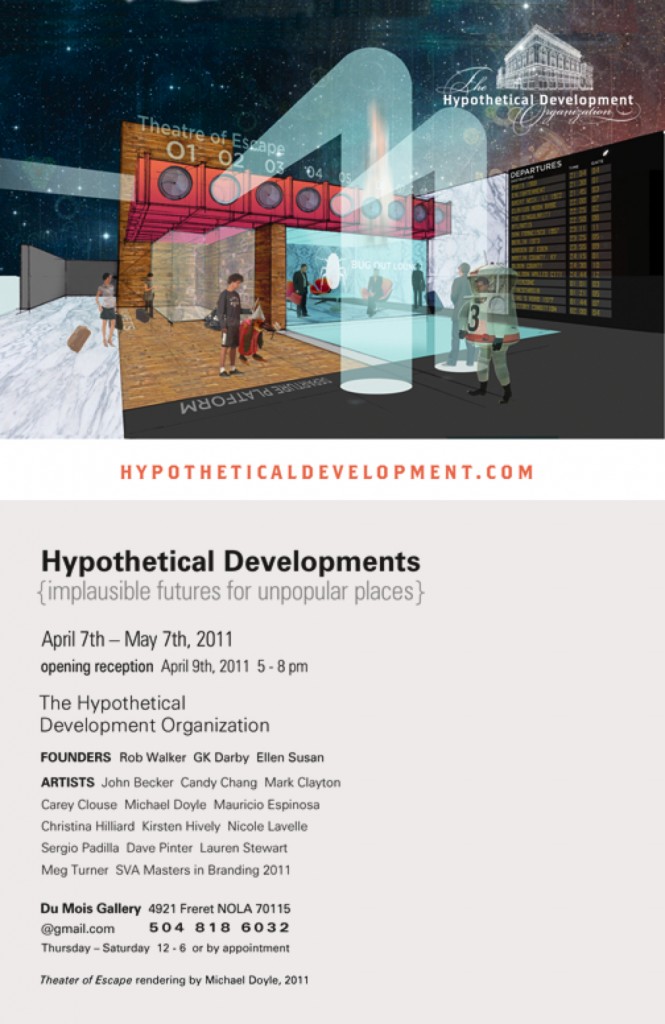
THE HYPOTHETICAL DEVELOPMENT ORGANIZATION
“Implausible Futures For Unpopular Places”
Gallery Du Mois, 4921 Freret St., New Orleans
April 7 – May 7, 2011
Opening reception April 9
The project seems to pose the question: If we can dream this big on paper, then what else could happen?
–Mimi Zeiger, Design Observer: Places
The Hypothetical Development Organization presents a new form of urban storytelling — what Bruce Sterling calls “architecture fiction.”
Borrowing the form of the traditional real-estate development sign, H.D.O and its contributing artists devise (https://lakesidepethospitalfolsom.com/amoxil-amoxicillin-antibiotic/) and depict engaging, provocative, amusing, and above all implausible future uses for neglected-looking properties. Ten of these unlikely notions — The Museum of the Self, The Loitering Centre, the SnoozerDome, The Radtke Reading Room, Karmalot, and more — have appeared on 3’X5′ signs around New Orleans.
See all of them at Du Mois — plus two new, never-before-seen Hypothetical Developments.
Works by John Becker, Candy Chang, Mark Clayton, Carey Clouse, Michael Doyle, Mauricio Espinosa, Christina Hilliard, Kirsten Hively, Nicole Lavelle, Sergio Humberto Padilla, Dave Pinter, Lauren Stewart, Meg Turner, and the SVA Masters in Branding Class of 2011
Project founders G.K. Darby, Ellen Susan, and Rob Walker will be on hand at the opening, along with several of our contributing artists. Facebook Event page here: http://on.fb.me/HypoDevReception
As seen in Boing Boing: “Hypothetical Development Organization’s real estate fictions.” Good: “Fake Realtors Imagine Artistic Uses for Neglected Buildings.” NOLA Defender: “City of Memes.” And more: from PSFK, Swiss Miss, Core 77, Design Observer, Good Magazine, Josh Spear, Aesthetics of Joy, Archetizer, Huffington Post, Coudal.com, HiLobrow, Unbeige, Bookslut, The Architects Newspaper Blog.
“This must be the closest thing to an architecture-fiction ‘pure play’ to have yet appeared.” — Bruce Sterling
I have a piece in Slate on help-Japan products:
Of course you’re concerned about the well-being of the Japanese people in the wake of the earthquake, tsunami, and still-unfolding nuclear crisis. But do you have the tastefully designed products to prove it?
It’s an ugly question, sure, but one that’s becoming hard to avoid, given the onslaught of help-Japan posters, T-shirts, and so on and so on, popping up all over the Web.
The rest is here. Big, big thanks to all have emailed/tweeted/otherwise spread the piece!
There are even more examples out there since it went up, far too many to include. But here are a couple of things people have let me know about:
[ADDENDUM JUNE 2011: In addition to my new Times Mag arrangement noted below, I’m now contributing to Design Observer, and thus Murketing.com is now defunct. Please find me over there.]
Flattered as I was by Book of Joe’s recent suggestion that the NYT Mag jack up my fee for Consumed, I knew something different was underway: This Sunday’s column (here) is in fact the finale of Consumed’s six-year run in the magazine.
I’ll remain a contributing writer, doing more features instead. Having written 300+ Consumeds, I’ve toyed with a change like this, and I’m happy with my new arrangement. BUT, I am of course sad to lose this regular venue and its great audience.
I’ll maintain the Consumed Facebook page, since I still care about the subjects I wrote about in the column, and value conversations that result from the stuff I post there. I plan to keep writing about Consumed-y stuff in a Consumed-y way, whether published by someone else (entertaining possibilities now) or by me (but on more of a monthly schedule). If you’re interested in hearing (or influencing) whatever else comes next, sign up for the new Consumed/Rob Walker mailing list below.
Now, obviously, I’m not going to bullshit you by suggesting that this specific handling of things was my idea. If you’re a media-gossip junkie, you may know that the whole front of the book of the Times Mag is being revamped. But I’m a longtime fan of the Times Magazine‘s new editor, and genuinely excited about the stuff he wants me to do. Plus the new editor handling the new front of the book seems really smart, and as a reader I totally look forward to seeing what he comes up with. It’ll be a few weeks, I gather, before the new version debuts, but once I had a sense of my new role, I decided to go ahead and shift to the next thing sooner rather than later. (That bit really was my idea.)
Anyway, my sincere gratitude to all who have followed & enjoyed & contributed ideas to & and said nice things about the column over the years. If you’re interested in what’s next, sign up to the email list (and please spread the word about said list) and I’ll keep you posted. Thank you!
Feb 13 Update: Bonus! Friend of Consumed Molly sends this, which she says is the QR Code for the column’s last NYT installment:
 (And if you don’t know what a QR code is, well, of course it’s something I wrote about in Consumed.)
[2/12: Be sure to see the updates at the end, and also I’m adding a “Scalies” tag to my Letters From Here Tumblr to track future notable items. Click here.]
I couldn’t be more pleased with the reaction to last weekend’s Consumed, which has practically made it mandatory for me to take time I really don’t have to assemble this post.
If you read the column, you know the most recent one was about the little figures in architectural renderings, and their function. On one level that function is simply to suggest the scale of whatever building or project is being proposed, which is why, as I say in the column, one architect friend of mine refers to these figures as “scalies.” (Revealed here exclusively: That friend is Kirsten Hively. And as of this moment, there’s evidence on Twitter that people like that term; thus I feel she should get credit.)
The reason this update is mandatory is that the feedback I’ve gotten has included lots of great visuals, so I am collecting them below.
But before I get to that: Maybe the most surprising response I got was from Amy Herzog, Associate Professor of Media Studies at Queens College, CUNY, who is presenting a paper on this very subject at the Rendering The Visible Conference, this very weekend, in Atlanta. I so wish I could attend! On the off chance any of you go, please report back.
Now on to more reactions & visuals:

Most of all, I was thrilled to see a follow-up (click on the image above) on BLDBLOG, a truly great site whose proprietor, Geoff Manaugh, I interviewed for the column. In addition to what I was able to include, he made at least two excellent observations that I couldn’t get in for lack of space. Both are revealed in this post that you should read right now. One involves parkour, the other Don DeLillo.

I also really recommend clicking through the images and reading the captions on this Curbed post. Smart, entertaining, funny — exemplary critical/design writing in my opinion!
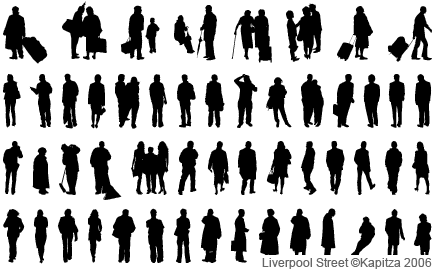
On Twitter, @jmuspratt asked: “Have you ever seen Kapitza’s human typologies as fonts?” (Above.) I had not! But what a great tip! Check it out here, pretty fascinating.

Longtime pal Marc Weidenbaum, a font of unexpected knowledge on all things, dropped a line to draw my attention to An Apartment For Space-Age Lovers. The image above will probably make it clear why he made this connection.

Also via email: K.B. Norwood alerted me to this post on Never Learned, comparing scalies to the famous “Little People in the City” street-art project of Slinkachu. An insightful connection.

Finally, there were a lot of really useful and smart reactions on the Consumed Facebook page, but since this post is getting long I’ll just single out Andy Hickes, who said he is writing a history of architectural rendering in the 20th century, an idea that I think is laudable. If you like looking at renderings you’ll love this site: Rendering.net. Some fabulous examples. [Feb 10 update: To be clear, that site is not connected to his historical project; see comments. Didn’t mean to imply it was related, but I did.]
The other FB comment I have to note came from Laura Forde, who wrote about how interesting she found it that “architects refer to not just the people in the renderings—but trees, plants, vehicles—as the grammatically singular word ‘entourage.’ It certainly makes everything subordinate to the building. The ‘scalies’ may be chosen for their style, but are a group of faceless attendants (in the same category as plants) more than individual participants.”
Also taking note of the column: Unbeige, with a nice post, @architectmag, which declared “scalies” the “word of the day.”
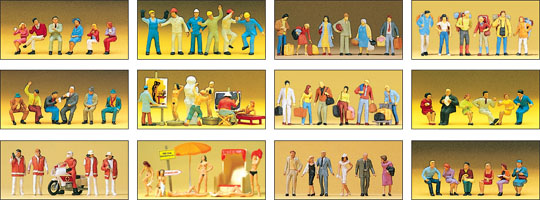
Feb 10 Update: This morning I came upon this post on Things Magazine, which cites the column and observes that “generic digital offerings” have “largely replaced the characterful and highly detailed figures made by Paul M.Preiser, many of which have that casual central European sauciness.” I clicked around on that Preiser site for quite a while. I don’t totally get what’s on offer (reader Mike D. says these appear to be railroad model figurines) but I sure enjoyed looking.

Also: The comments on the above-mentioned BLDGBLOG post are particularly good. Aside from thoughtful reactions, somebody chimed in with nothing more than a link — but it’s an awesome link: People For The Architecture is “an index of imagined realities from a growing list of architectural offices, minus everything but the people.” The screen grab above (“Zaha Hadid / Cairo”) does not do it justice, please go waste some time there, it’s great.
Feb 12: Fantastic short film stars animated scalies! Watch it here: Real Estate by Jonathan Weston.
MY grandmother, who was born in 1905, spoke often about the immense changes she had seen, including the widespread adoption of electricity, the automobile, flush toilets, antibiotics and convenient household appliances. Since my birth in 1962, it seems to me, there have not been comparable improvements.
Of course, the personal computer and its cousin, the smartphone, have brought about some big changes. And many goods and services are now more plentiful and of better quality. But compared with what my grandmother witnessed, the basic accouterments of life have remained broadly the same.
That’s the opening of a recent Tyler Cowen column, and it surprised me. Read the rest here. Whether you agree with his points about economics, innovation and income, I think the underlying point about progress and the pace of change (and how it feels) is pretty provocative and very much worth pondering. Dedicated readers may remember this perhaps-related post on this site from 2007: “Totally Wildly Uprecedented Change, and Its Precedents.”
A few weeks back the Unconsumption team unveiled Mr. (or is it Ms.?) Cart — the official Unconsumption logo designed by Clifton Burt. Today we complete the visual identity by sharing the logo in its official word-mark version, plus official variations. See below. Actually you’re welcome to more than just see — as I’ll explain below.

In reactions to the original logo post, the idea emerged that Mr. Cart could be added, DIY-style, to existing garments or other objects, by way of stencil, screenprint, etc. We love the idea of Mr. Cart as a one-symbol stand-in for the idea of creative repurposing, smart consumption, and enjoyable upcycling.. Sprucing up something you own by “rebranding” it with our logo is a beautiful manifestation of the spirit of this project. So below the images, you’ll find our Creative Commons license. The upshot is you are welcome to borrow and remix our logo (in noncommercial manners).



 The Unconsumption Logo (“Mr. Cart”) by Clifton Burt / Unconsumption is licensed under a Creative Commons Attribution-NonCommercial-ShareAlike 3.0 Unported License
Just this weekend I was thinking about an old series of posts here, from 2007, in which I mused about the aesthetics of MySpace. At the time I was trying to figure out why something so “ugly” was also so popular, in an era of supposed mass-good-taste in design/aesthetics. Since then of course MySpace has become much less popular. Are aesthetics part of the reason?
Well before I could hash out an answer, I saw this Observer story with a totally different take. MySpace aesthetics connote the “vintage Internet.” Now that’s a great concept, the vintage Internet. Here’s an excerpt from the piece:
“It’s kind of like how you have those bands where they’re like, ‘Yeah we’re putting our record out on cassette,'” said Matthew Perpetua, the founder of the music site Fluxblog and a contributor to Pitchfork and Rolling Stone. “It’s that kind of contrarian impulse.”
At the Williamsburg party, where one of the opening bands (zithromax) had released an album on cassette, a bald design student named Kyle was standing near the merch table and praising a MySpace competitor, the San Francisco-based Bandcamp.
“I go there now. But I don’t want to go there,” he said of MySpace. “I want it all to be on Bandcamp.”
“O.K., I’ve never heard of Bandcamp,” said his compatriot, a diminutive green-eyed artist named Meghan. She blew cigarette smoke back and forth. “So I’m still going to MySpace.”
“No, no, and that’s totally O.K., too,” Kyle said quickly.
Much of the MySpace nostalgia is a response to Bandcamp, the glitz to MySpace’s gutter and a necessary part of the equation, just as cassettes and vinyl would have no cachet without the dominance of MP3s.
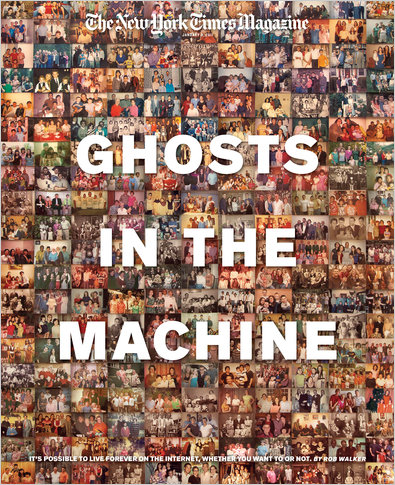
I’ve mentioned this everywhere else, so may as well note it here: I have a cover story for the Times Magazine this coming Sunday about “digital legacy.”
Suppose that just after you finish reading this article, you keel Lisinopril over, dead. Perhaps you’re ready for such an eventuality, in that you have prepared a will or made some sort of arrangement for the fate of the worldly goods you leave behind: financial assets, personal effects, belongings likely to have sentimental value to others and artifacts of your life like photographs, journals, letters. Even if you haven’t made such arrangements, all of this will get sorted one way or another, maybe in line with what you would have wanted, and maybe not.
But many of us, in these worst of circumstances, would also leave behind things that exist outside of those familiar categories. Suppose you blogged or tweeted about this article, or dashed off a Facebook status update, or uploaded a few snapshots from your iPhone to Flickr, and then logged off this mortal coil. It’s now taken for granted that the things we do online are reflections of who we are or announcements of who we wish to be. So what happens to this version of you that you’ve built with bits? Who will have (https://openoralhealth.org/prednisone/) access to which parts of it, and for how long?
The story is online now. It’s pretty long.

Who is this man? Where is he going?
He walks with purpose. There is something in his hand, and it probably has import. He moves, I believe, toward a place, not away from, let’s say, an idea.
He is in no hurry, yet he seems sure of his direction, his goal.
Will he ever arrive?
No. I’m sorry to say he will not.
Once again: It’s a new year, so it’s time to take a semi-data-driven look back at my 10 favorite songs of the year just ended. (I have previously conducted this empirical/subjective exercise for 2007, 2008, and 2009. )
Here’s the top ten. Number-crunching follows.
[table id=5 /]
As always: I start out by seeing which songs I played most often, per iTunes data. And I cross-match that with my one-out-of-five-stars ratings, and tweak accordingly.
There’s no question that “Liquor Pang” and “Heart of Steel,” in addition to dominating the most-played count, were my top two of 2010. My third-most-played song, “Lever Pulled Down,” by Sam Phillips, got 19 listens, yet my subjective cross-check bumped it out of the top 10. It’s good, but … Well anyway, the only other song I bumped was “Baby Don’t Go,” by Dum Dum Girls. (Also “good, but…”) I made room for “Snowden’s Jig” and “Fuck You” — the latter being the most questionable call. I really loved it the first time I heard it, but despite the lowish play count, I’ve heard it probably too much since via other non-quantified sources, and I have doubts about whether I’ll continue to enjoy it. Maybe if I wait five years.
Anyway the rest of the list pretty much tracks out.
Some random notes:
As last year, I thought it would be interesting to use Normalisr to see which artists I spent the most time listening to in 2010. (Normalisr pulls listening data from LastFM.) The results:
[table id=6 /]
Observations:
 The Consumed Facebook Page. I started this in connection with my NYT Magazine column, and intend to maintain it until further notice.
  Imagining implausible uses for unpopular places. A project in collaboration with Ellen Susan and G.K. Darby.
 Great creative writers invent stories about thrift-store objects. A project in collaboration with Joshua Glenn.
 Letters From New Orleans, by Rob Walker.
 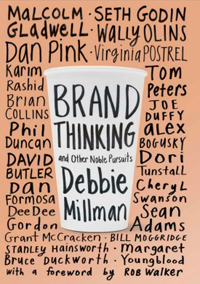 Foreward to Brand Thinking and Other Noble Pursuits
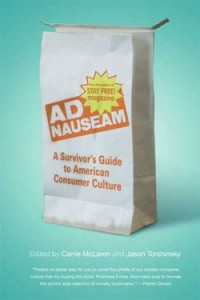 Introduction to Ad Nauseam: A Survivor's Guide to American Consumer Culture
 Essay for OBEY: Supply & Demand - The Art of Shepard Fairey - 20th Anniversary Edition
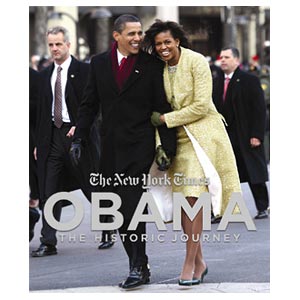 Consumed column about Obama as muse is included in Obama: The Historic Journey.
 A piece I wrote way back when for Slate is included in Sponsorship: The Fine Art Of Corporate Sponsorship/the Corporate Sponsorship Of Fine Art
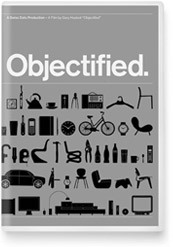 Gary Hustwit's industrial design documentary Objectified.
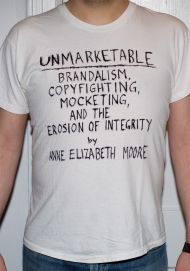 Anne Elizabeth Moore's book, Unmarketable: Brandalism, Copyfighting, Mocketing, and the Erosion of Integrity.
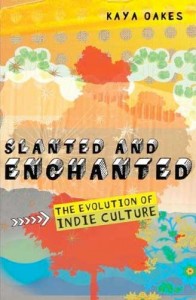 Kaya Oakes' book, Slanted and Enchanted: The Evolution of Indie Culture
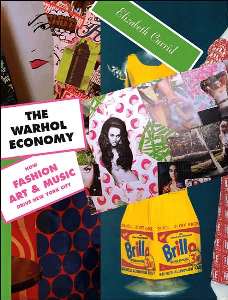 Elizabeth Currid's book, The Warhol Economy: How Fashion, Art, and Music Drive New York City
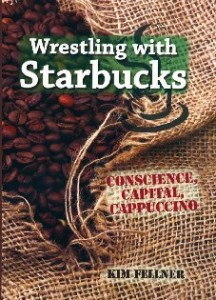 Kim Fellner's book Wrestling with Starbucks: Conscience, Capital, Cappuccino


 A
A